
In this three-part blog series, we’ve explored how the principles we use in designing games and immersive entertainment inform the design of more impactful learning experiences that help learners to practice skills in realistic simulations and keep them engaged
For the full deep dive, check out our earlier posts, where we covered:
Now, we’re wrapping up with collaboration and team dynamics.
Very often, it’s easy to default to ‘we’ll create an eLearning module for that’ when considering a learning intervention. Social, peer-to-peer learning isn’t the answer for all learning needs – but when it can be, social learning has serious benefits – especially in the post-Covid landscape where for many of us remote work is the norm.
We’ve delved into those benefits in a previous blog but here’s a highlighted version…
A study by E. Hermann et al set cognitive tests for chimpanzees alongside a group of 2.5-year-old human toddlers.
While they were on a similar level of general intelligence in areas like spatial understanding, calculations and causality, humans far outstrip primates in tasks that involve learning from each other.
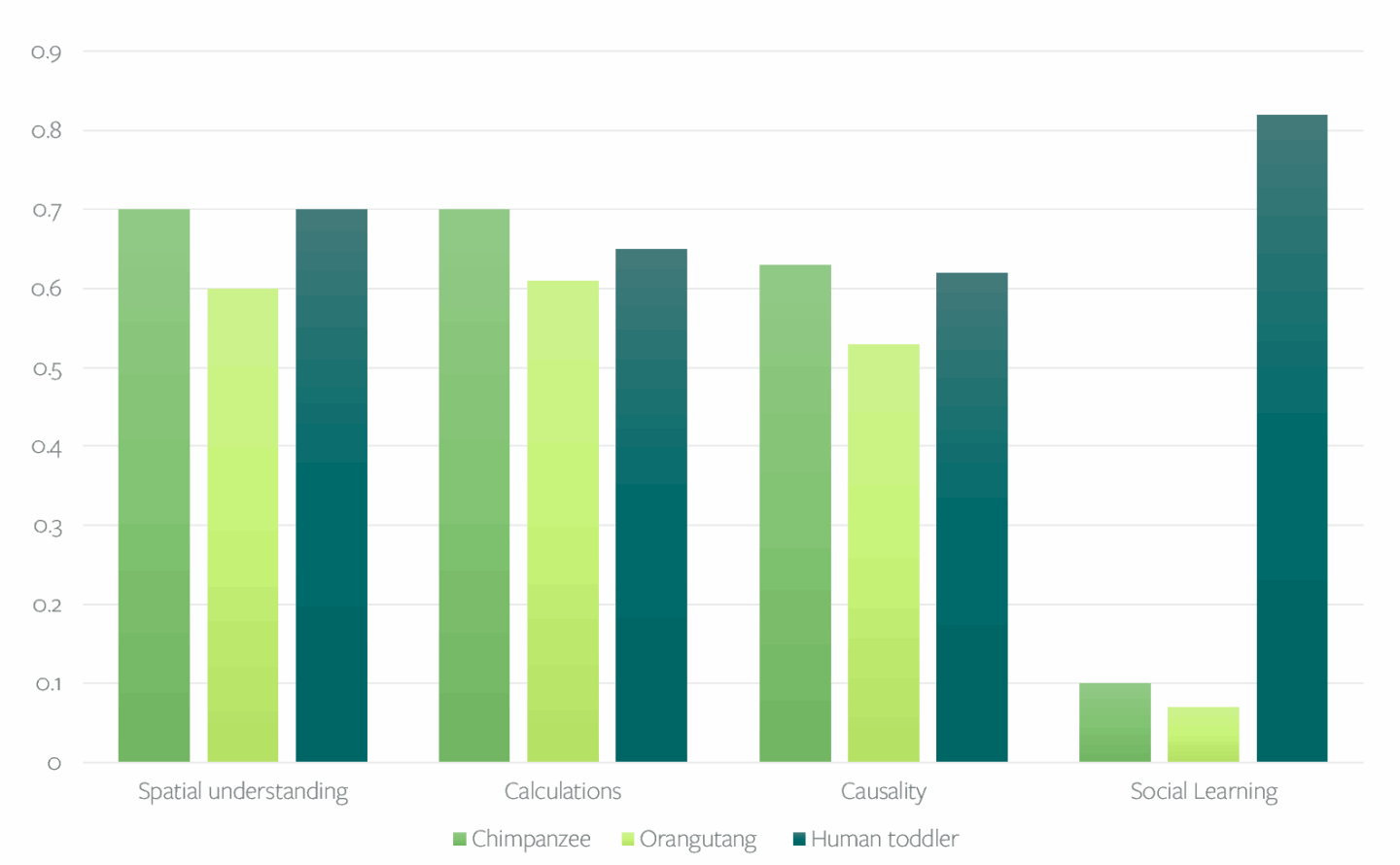
In fact, the toddlers were actually about eight times more effective at learning from others – that’s our social learning superpower.
So, how do you build a social learning experience that works for everyone?
Speaking of superpowers – multiplayer and team-based experiences is one of Make Real’s sweet spots. Across both games and learning, we’ve built memorable group experiences that get people working together (or occasionally against each other) in ways that help everyone drop into flow, create lightbulb moments and improve learning outcomes.
Our latest and greatest consumer VR game Hazard Us is a prime example. Each level is its own VR escape room, with the added ‘fun’ of outrageous, cartoonishly fatal hazards lurking around every corner.
Just like in physical escape rooms, players need to work together to solve puzzles and riddles. At various points in the game, players will only have partial information available to them – so success relies on communication, perspective-sharing, and collective problem-solving.
In the clip below, three members of the Make Real team are testing a new level. Two players are up on a platform figuring out the control panel, while another navigates a laser-filled obstacle course below. As the team explores, they eventually realise the control panel opens doors to laser-protecting towers, and a chute dispenses bombs. Cue bomb-chucking teamwork (and multiple deaths!) to disable the lasers and survive the course. This repeated fail-fast-and-try-again design accelerates problem solving – and also taught ourselves a lot about our team members strengths.
Each player contributes something different: spotting control functions, hurling bombs with questionable accuracy, or bravely barrelling through the danger zone. And they must work together to progress.
Hazard Us is a chaotic social game, but the underlying principles translate directly to learning design.
Putting people into abstract scenarios that sit well outside their day-to-day roles is a brilliant way to level the playing field. Everyone can step outside organisational hierarchies and bring their personal strengths to the table.
It’s something our friends at Jenson8 do very well. Their group VR experiences drop teams into high-pressure, other-worldly scenarios that bear no resemblance to normal work — stripping out hierarchy and encouraging natural collaboration.
And you don’t have to use VR for this.
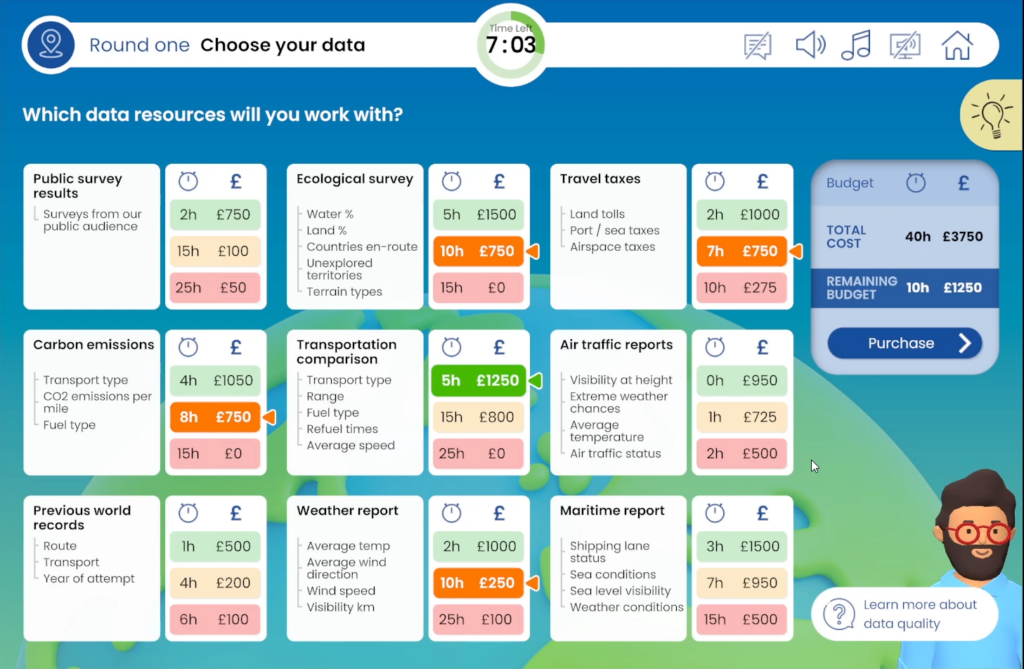
For one UK retail bank, we created an online collaborative game where teams use data to design and pitch an “Around the World” expedition to a virtual panel of stakeholder funders.
Players get together over a video call, logging into their own instances of the game so that everyone’s progress is tracked. An elected team leader drives the game and throughout it team members can take on different tasks such as analysing specific areas of data to help the group make decisions more easily and quickly.
We talked in the previous post in this series about groups of people having different abilities. And in a group learning experience, that can actually have huge benefits. This data game was specifically designed for groups of mixed experience levels, including data-specialists and also non-practitioners.
This led to those with less experience learning from the practitioners but also allowed for the practitioners’ assumptions to be questioned about what their internal stakeholders require from data to make key business decisions. These collective ‘aha’ moments are often missed in traditional single-learner eLearning experiences that deliver knowledge, but don’t allow for skills practice as a group.
The key for all these group experiences is to make collaborating essential.
In Hazard Us and Jenson8, that’s achieved by distributing information. In “Around the World”, it’s the sheer volume and variety of data that forces teams to divide and conquer.
Across this series, we’ve looked at three pillars of designing learning through a game-informed lens:
But there is one final piece…
Everything we’ve talked about sounds great — but in L&D, demonstrating impact is non-negotiable.
The value you measure will depend on your goals. You might track:
And there are so many ways of doing this.
For example, we are lucky enough to have worked with clients who are committed to testing and proving value. For example, we commissioned a study on our work with London Business School. We wanted to find out if AI-powered conversation practice delivered improvements.
(Spoiler: it does. And you can read all about that here.)
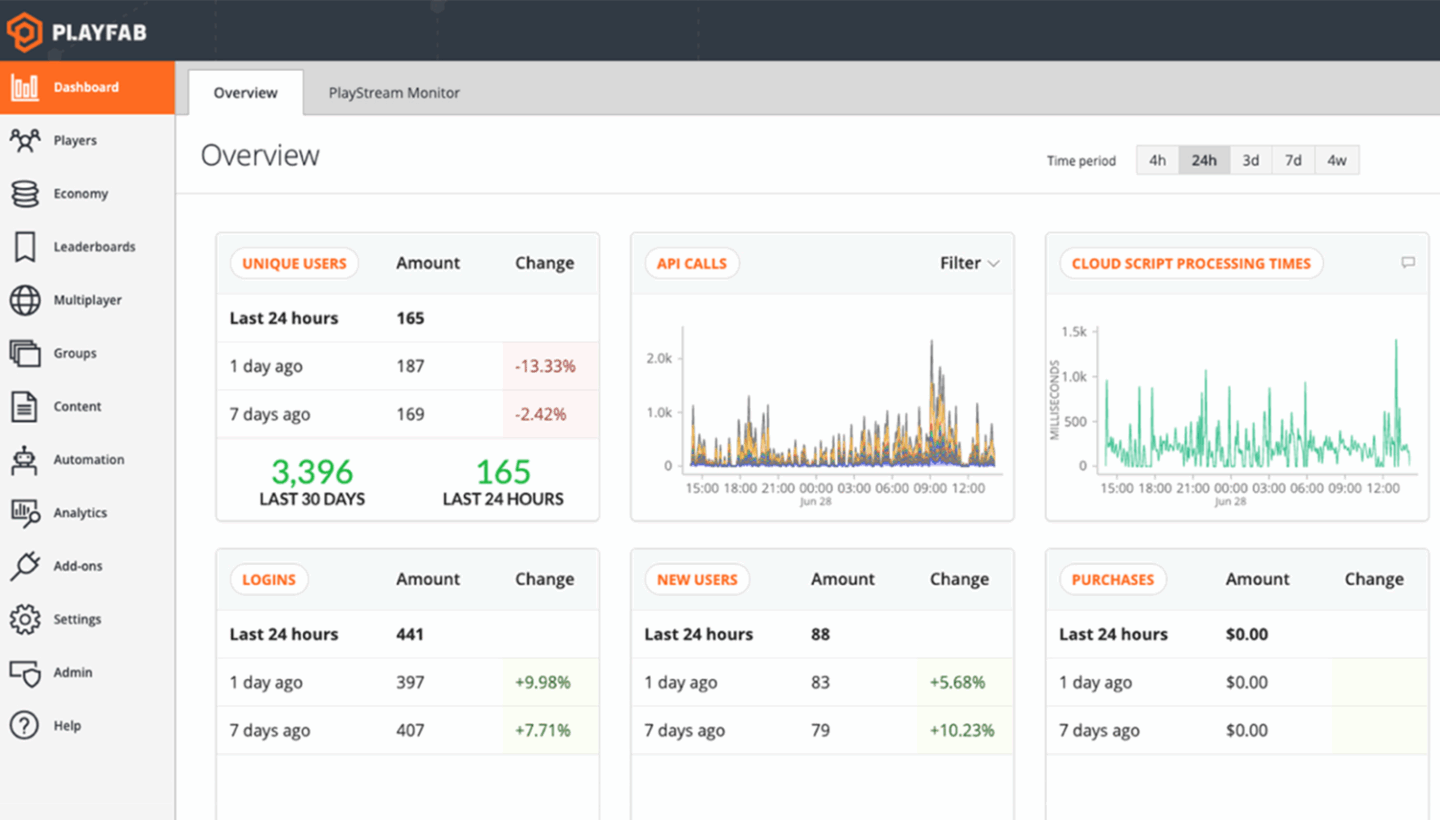
You can even use tools from the world of gaming for this too. Playfab is just one example, and it’s what measures player activity for Vodafone DriveSafe. (And the best part is that it’s free up to 100,000 players.)
So that’s the trilogy wrapped. Whether you’re designing games, learning, or something delightfully in-between, the formula holds: set the stage, strike the right challenge, and make people need each other to succeed.
If you can nail those three, you won’t just get engagement — you’ll get momentum, mastery, and learning experiences people actually want to come back to.
Curious about how these ideas look in the wild? Dive into the case studies below.
We’re always happy to talk to you about how immersive technologies can engage your employees and customers. If you have a learning objective in mind, or simply want to know more about emerging technologies like VR, AR, or AI, send us a message and we’ll get back to you as soon as we can.